It took me a long time to finally visit Las Vegas. I just didn’t think it was for me because I’m not really into the typical “what happens here stays here” kind of activities. Gambling, drinking, partying… Never really been my thing. Then my parents suggested we take a family trip to Las Vegas for Thanksgiving. They knew what I didn’t know – there is way more to Vegas than just The Strip! Within 3 years of that first trip, I moved to Las Vegas!
I’m really not adventurous, so while we’ll talk about some beautiful outdoor locations, I might skip some big hikes or activities that you’re already familiar with. I want to make sure everyone knows that just because your frenemy at work was bragging about climbing a mountain at Red Rock Canyon, doesn’t mean it’s not a place for you too! So, we’ll talk short hikes to majestic views, scenic drives, cute shops, and fun tours.
Please keep in mind that some of the links in this post are affiliate links and, if you go through them to make a purchase, I may earn a commission (at no extra cost to you). I link to these companies and their products because I personally trust them and not because of the commission I receive. You can read my disclaimer for more info.
10 Best Day Trips From Las Vegas
I’m not a fan of marathon drives masquerading as day trips. Three hours is my max: far enough to feel like an adventure, close enough that I get to sleep in my own bed. Las Vegas may feel like an island in the desert (sometimes literally called the Ninth Island of Hawaii), but there’s still plenty to explore within a three-hour drive. While you could be starting from anywhere in the Vegas valley, we’re going to call the Flamingo our starting point for time and distance estimates since it’s a relatively central point on The Strip and in the valley in general.
One quick rule for exploring in the Las Vegas area? No matter the time of year, even if you’re just planning to stay in the car – always, always, always carry plenty of water.
1. Red Rock Canyon National Conservation Area
- Distance: ~24 miles | 35 minutes
- Activity Types: Hiking, Horseback Riding, Camping, Scenic Drive, Climbing
- Costs: $20 per car entrance fee (included in the America the Beautiful National Park Annual Pass)
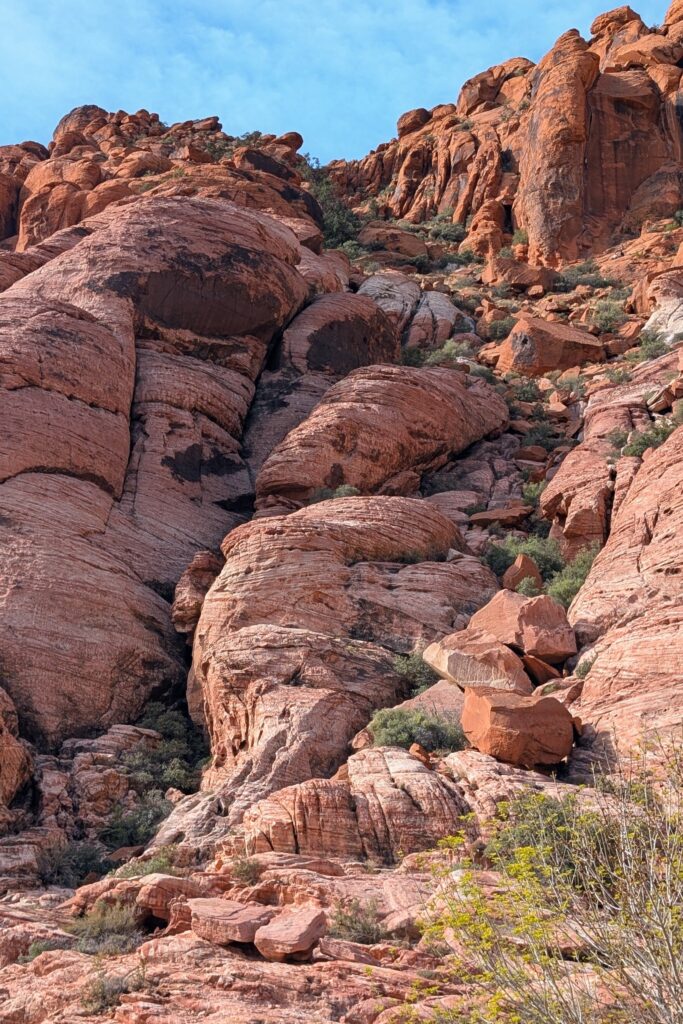
Starting with the nearest of our adventures, Red Rock Canyon National Conservation Area is a gorgeous landscape of layered rocks and stunning red sandstone. It actually amazes me how close such a beautiful natural wonder is to the bustling activity and bright lights of the Las Vegas Strip. Seriously, at just over 30 minutes drive between the two utterly different scenes, I hesitate to even call this one a day trip. You can enjoy a morning of hiking through canyons, past red sandstone cliffs and still make it back to your hotel in plenty of time to get ready for dinner and a show.
While hiking, climbing, and bouldering are popular, the 13-mile scenic drive makes it accessible to those who aren’t looking to break a sweat on its 26+ trails. I recommend stopping at each of the parking areas along the loop to explore a little. The first couple of stops, Calico I and Calico II, are trailheads for Calico Hills – it’s one of the longer hikes, but even just a 5-minute walk from the car puts you in a stunning Mars-like scene. Further along the scenic drive, Lost Creek – Children’s Discovery trail is less than a mile long and great for spotting archaeological sites, interesting plant life, a creek, and a seasonal waterfall.
Red Rock is popular with both visitors and locals, so it occasionally gets pretty busy. Be sure to check if entry reservations are required before you visit (usually during peak season, from October 1 to May 31). The reservations are easy to obtain by visiting recreation.gov and searching for Red Rock Canyon. A number of the trails are accessible from outside the scenic drive area, meaning they can be visited without a reservation or entry fee – like those on Calico Basin Rd. Just be aware that the parking lots tend to fill up early.
Being just a few miles off the 215 beltway, it’s an easy drive from anywhere in the Las Vegas valley. If you’re visiting town without a car though, there are a number of fun tours you can take as well.
Highly Rated Tours of Red Rock Canyon
2. Mount Charleston (Spring Mountains National Recreation Area)
- Distance: ~40 miles | 55 minutes
- Activity Types: Hiking, Biking, Skiing/Sledding, Camping, Horseback Riding, Climbing, Scenic Drive
- Costs: No entrance fee (there are fees for some activities like camping and group events)
My first trip to Las Vegas was over a surprisingly cold Thanksgiving week with my parents (don’t let anyone tell you Las Vegas doesn’t get cold!) and I was shocked to see a white capped mountain in the distance as we Ubered to our hotel. After learning it was Mount Charleston, we promptly made our way there later in the week! It’s since become a personal favorite for me as it’s the closest of all these wonders to where I made my home when I moved here to Las Vegas.
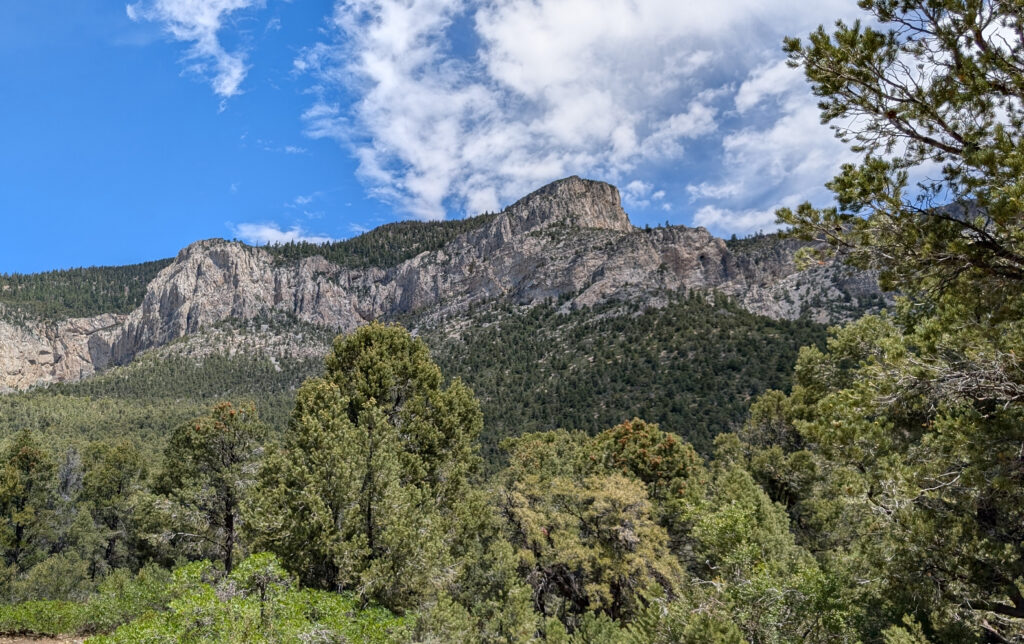
Mount Charleston, and the surrounding Spring Mountains National Recreation Area, is an alpine dream rising up from the Mojave Desert. It’s a refreshing escape from the heat of the summer and a snow-blanketed wonderland in the winter. Spring and fall are the sleeper hits, with colorful wildflowers and fall foliage.
Your first stop should be the Spring Mountain Visitor Gateway. It has the usual gift shop, interpretive area, and beautiful views, but it’s also home to Silent Heroes of the Cold War National Memorial, the USA’s first Cold War Memorial, and The Seven Stones Plaza, honoring the seven Southern Paiute tribes (also known as the Nuwuvi).
Just past the Visitor Gateway you’ll find The Retreat on Charleston Peak. The dining on-site, the Canyon Restaurant, is a great place to grab a meal and explore the interior of the lodge. I’ve been to several craft shows hosted here and it’s always a treat to visit!
The area is home to more than a dozen trails, from the easier Atomic Duck and Eagles Nest trails to the more difficult ones like Upper Showgirl or the North Loop. Hurricane Hillary swept through in 2023, severely damaging many of the trails in the area. Over two years later and several trails are still closed – so be sure to check with the rangers or the Mount Charleston website to see what’s open.
If you’re just looking to admire the sights from the comfort of a vehicle, there’s plenty to see from the car with a number of scenic overlooks to stop at. Desert View Overlook on Deer Creek Rd is a personal favorite. That said, snow tires/chains are often required in the winter – so be sure to check the website first. The main highways have electronic signage announcing when chains are required, so you won’t be caught off guard. Parking lots can also fill up after a good snow, but again, the signs on the way will often share that info too.
Speaking of good snows, Lee Canyon Ski Resort is also located at Mount Charleston. I’ve never skied myself, but Lee Canyon offers lessons for kids, adults, and private groups. They have over 25 runs, from bunny slopes to black diamonds. Of course, after all the snow melts, Lee Canyon doesn’t just call it quits for the season. They have mountain biking, disc golf, yoga, outdoor concerts and more!
Highly Rated Tours of Mount Charleston
3. Hoover Dam & Boulder City
- Distance: ~38 miles | 45 minutes
- Activity Types: Tour, Sightseeing, Shopping, Exploring town
- Costs: $15 – $40 for different level tours (you came all this way, get the dam $40 tour!). Parking at the dam is around $10.
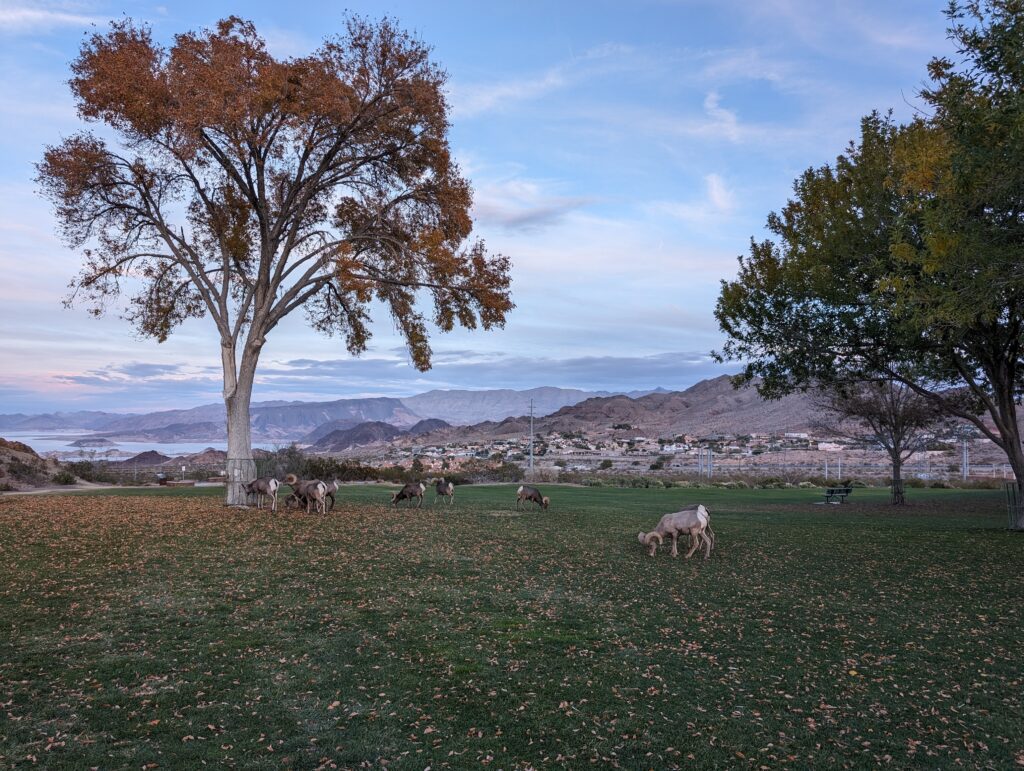
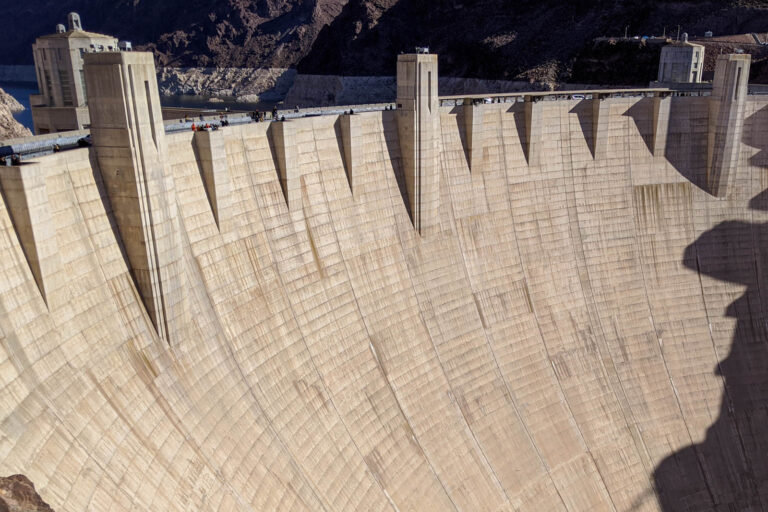
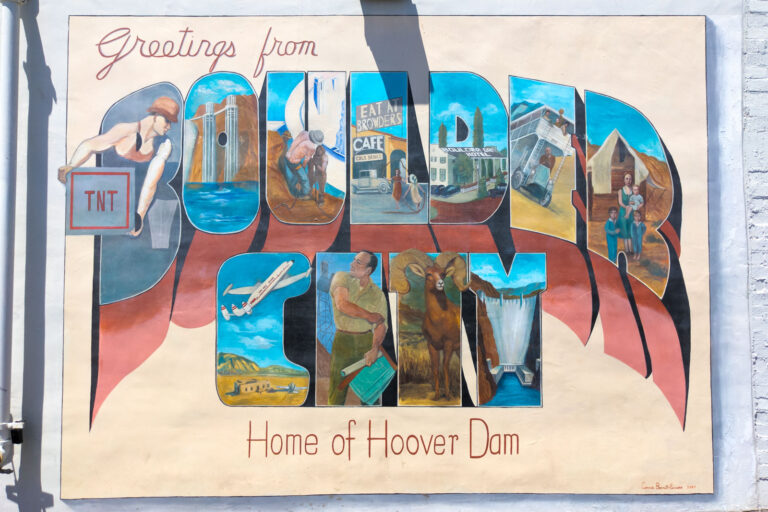
Boulder City is probably my favorite place on this list. Originally built to house the workers building Hoover Dam (though it was named Boulder Dam until 1947). Gambling and alcohol were both banned at the time and though alcohol is no longer prohibited, Boulder City is still one of only two towns in Nevada where gambling is still off the table (Panaca is the other). Perhaps because of that, the city has remained on the small side and full of retro charm and a fun artsy, craftsy community.
I recommend starting your day with a full Guided Dam Tour in the morning. Get there early, before it gets crowded (before 11am). After the tour, head into Boulder City for lunch at The Coffee Cup Cafe (featured in the very first episode of Diners, Drive-ins and Dives) or Southwest Diner. Then spend the afternoon exploring town! Some of my favorite places are Hemenway Park where the local Big Horn Sheep often hang out (check out the town’s “Ram Cam” to see if they’re out & about before heading over), the Nevada State Railroad Museum, Grandma Daisy’s Candy & Ice Cream Parlor, the many antique shops, and the historic Boulder Dam Hotel & Hoover Dam Museum. Make sure to walk along Nevada Way and check out all the sculptures and cute shops.
For a full half-day plan with timing, what to skip, and more details on each stop, check out my Boulder City half-day guide.
Highly Rated Tours in Boulder City
4. Lake Mead National Recreation Area
- Distance: ~25 miles | 40 minutes
- Activity Types: Hiking, Camping, Boating, Kayaking, Swimming, Fishing, Horseback Riding, Scenic Drives, even SCUBA diving!
- Costs: $25 per car entrance fee (included in the America the Beautiful National Park Annual Pass)
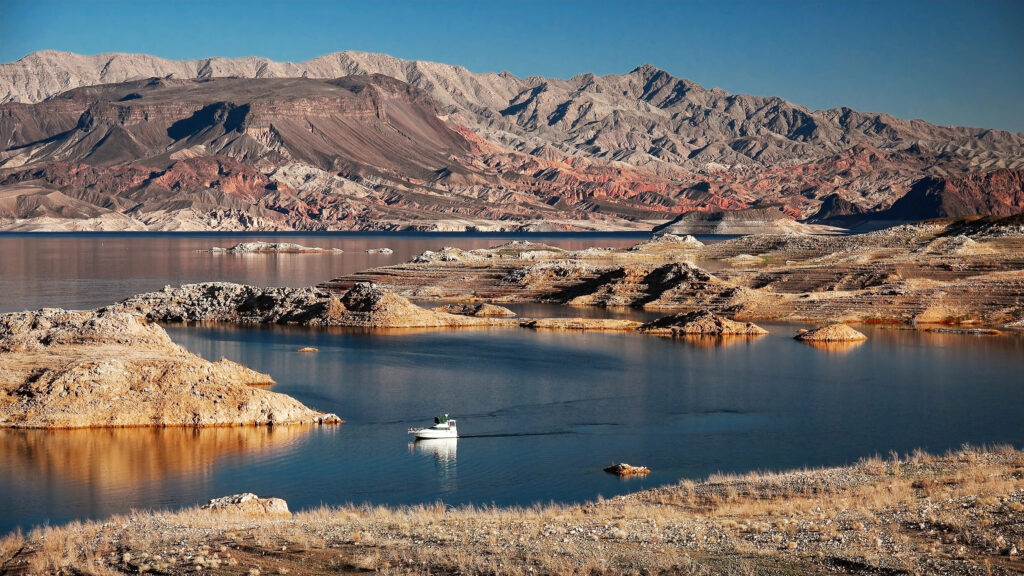
Lake Mead could potentially be included on your day trip to Hoover Dam and Boulder City, but it’s so huge, I felt it deserved its own number in the list. Located along the Colorado River, formed by Hoover Dam, Lake Mead is only a part of the full recreation area. There’s also Lake Mojave, Las Vegas Bay, and acres of rugged land.
There are two scenic drives – Lakeshore Road, along the southern banks of the lake, connects Lake Las Vegas to Boulder City and Northshore Road, connecting Lake Las Vegas to Valley of Fire State Park. Both are interesting, but Red Rock’s scenic drive still wins for scenery.
Of course, if you’d rather see the sights from the water, instead of the shore, be sure to hop on a sightseeing cruise. The Desert Princess paddlewheeler will take you out across the lake and down to Hoover Dam. And, this one is a decent summer activity too because two of the Desert Princess’s three floors are enclosed and air-conditioned! She even hosts a dinner cruise some evenings.
If you’re up for some hiking there’s the Historic Railroad Trail which follows, unsurprisingly, a historic railroad route. What was once miles of train tracks connecting Las Vegas, Boulder City, and Hoover Dam, is now a well-maintained trail that passes through five original tunnels. It’s an easy hike, but not a short one, at 7.5 miles round-trip. Other outdoor activities in the area include horseback riding, fishing, boating (because, you know, it’s a lake), kayaking/canoeing (Black Canyon National Water Trail), and even SCUBA diving.
Highly Rated Tours of Lake Mead
5. Valley of Fire State Park
- Distance: ~55 miles | 1 hour
- Activity Types: Hiking, Camping, Scenic Drive
- Costs: $15 per vehicle entrance fee ($10 for NV residents)
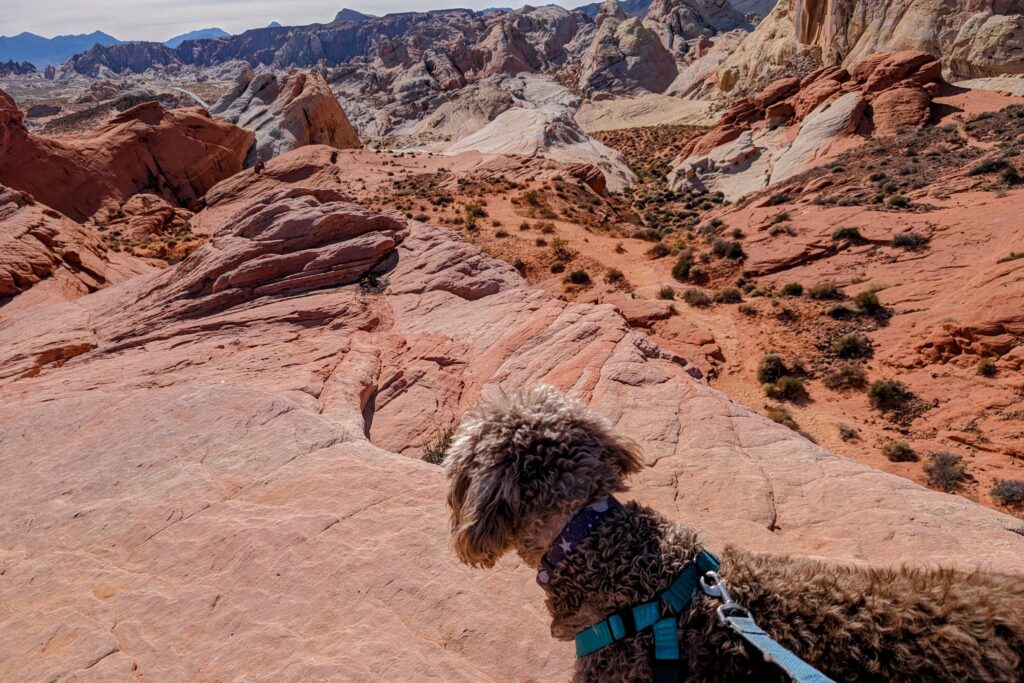
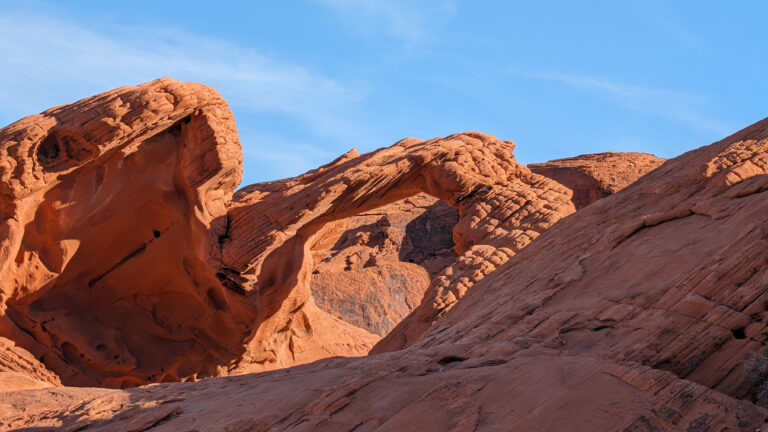
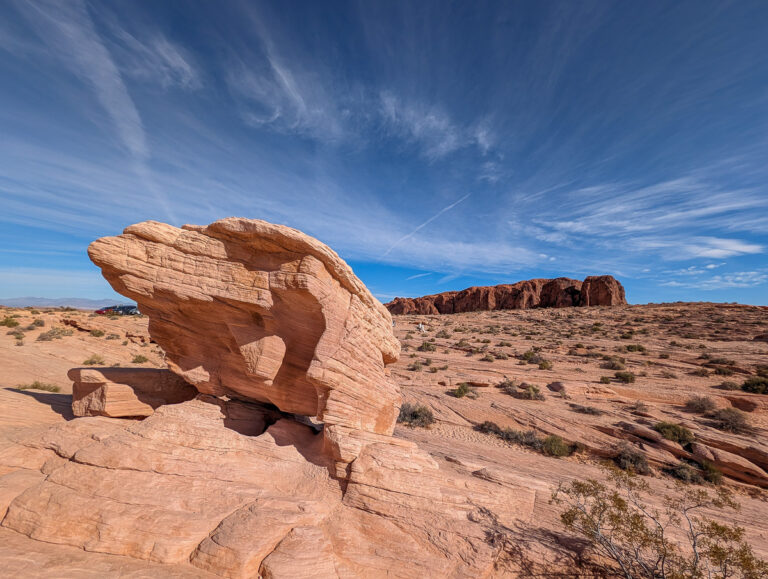
Valley of Fire is considered Nevada’s first State Park; dedicated in 1934 and opened a year later in 1935. It’s home to ancient petroglyphs and even older sandstone outcrops. The red Aztec sandstone jutting out among the tans and greys of the limestone make for dramatic, otherworldly scenes.
Speaking of otherworldly scenes, nerds like me may recognize Silica Dome as Captain Kirk’s final resting place on Veridian III in Star Trek: Generations. The bridge from that scene is also still in the park, but it was moved to Elephant Rock Trail (I find it a bit unremarkable though).
There is a brand spanking new Visitor Center and I highly recommend stopping in toward the beginning of your visit. They have interesting displays about the geology and ecology of the park and the rangers are happy to answer any questions. There are a number of trails in the park, ranging from the quick .1 mile “hike” on Balancing Rock Trail near the Visitor Center, to the nearly 8 mile Arrowhead Road Trail.
Luckily, many of the top sights are closer to the road (though may still require some uneven terrain or stairs). Some of my favorites are Atlatl Rock (staircase up to the petroglyphs), Elephant Rock, Fire Wave, and Silica Dome Overlook.
Valley of Fire State Park is open year-round, but this is the Mojave desert and things can get a little hot. If you’re visiting in the summer months, I’d recommend enjoying the sights from the car or at least the viewpoints near parking areas. In fact, many of the trails are closed between May and September, for the safety of visitors and staff.
If you have your own car or are renting one, it’s a easy drive up I-15 north until you see the signs for Valley of Fire State Park on the right. There are also plenty of tour options available that will pick up from the Las Vegas Strip.
Highly Rated Tours of Valley of Fire
6. Nelson Ghost Town/Eldorado Canyon
- Distance: 47 miles | 1 hour
- Activity Types: Mine tour, exploring
- Costs: $20 mine tour
I read once that Nevada has more ghost towns than real towns, thanks to its mining history. Someone would find gold, or more likely silver, and a little town would spring up practically overnight to serve and profit from the miners. Then, the mine would dry up, the miners would move on, and the town would die off soon after. Most of the towns disappeared entirely, but the remnants of many still stand. And some, like Nelson Ghost Town, were restored and are open to visitors looking to learn about the Wild West past.
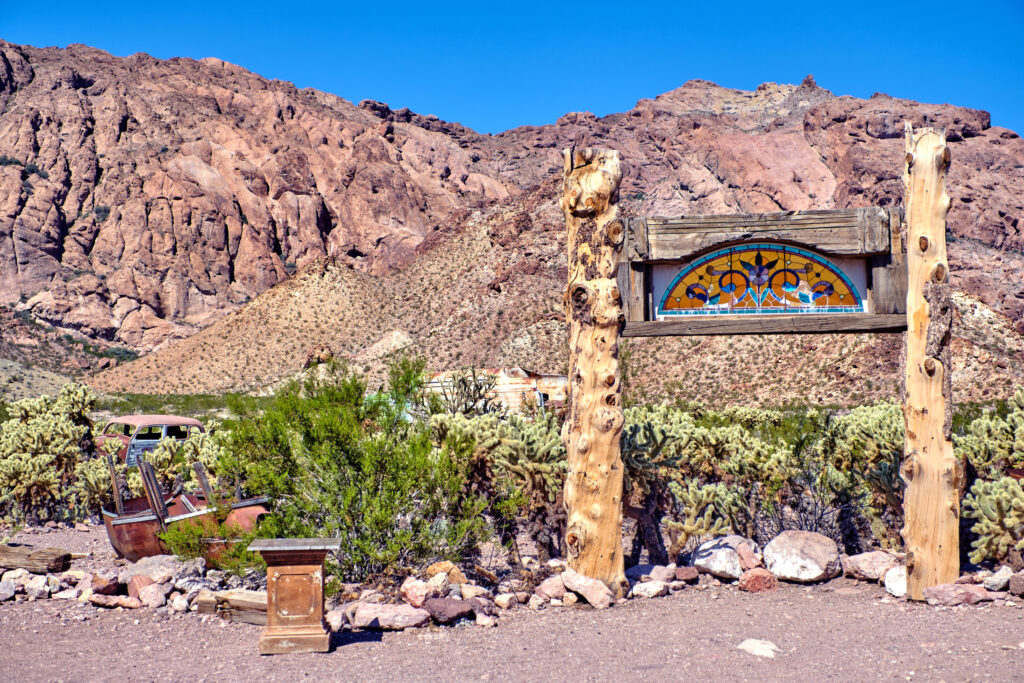
The Techatticup Mine, located in Eldorado Canyon, is the main event here. Dubbed Nevada’s “oldest, richest, and most famous” mine, the first gold here was found by Spaniards in the 1700s (hence the name Eldorado), years later during the gold rush new mines were found with millions of dollars worth of gold, silver, copper, and lead. During this time, Eldorado Canyon became a haven for criminals, Civil War deserters, and just general old west baddies.
It’s a much safer place to visit now! You can learn all about the area’s crazy history, tour the mine, and visit the restored mining camp. They also host weddings, have a large rent-able picnic area, and offer trips down to a cove on the Colorado River.
Highly Rated Tours of Nelson Ghost Town
7. Grand Canyon West Rim
- Distance: 128 miles | 2 hrs 20 mins
- Activity Types: Hiking, Sightseeing, Zipline, Helicopter rides (if you’re braver than me)
- Costs: Several pass options. The All-Access Pass is $99
While you could day trip from Las Vegas to Grand Canyon National Park, it’s a little over four hours and that’s just too much driving for me in one day. Luckily, the Hualapai Indian Tribe owns much of the western portion of the Grand Canyon and have opened up their reservation to us.
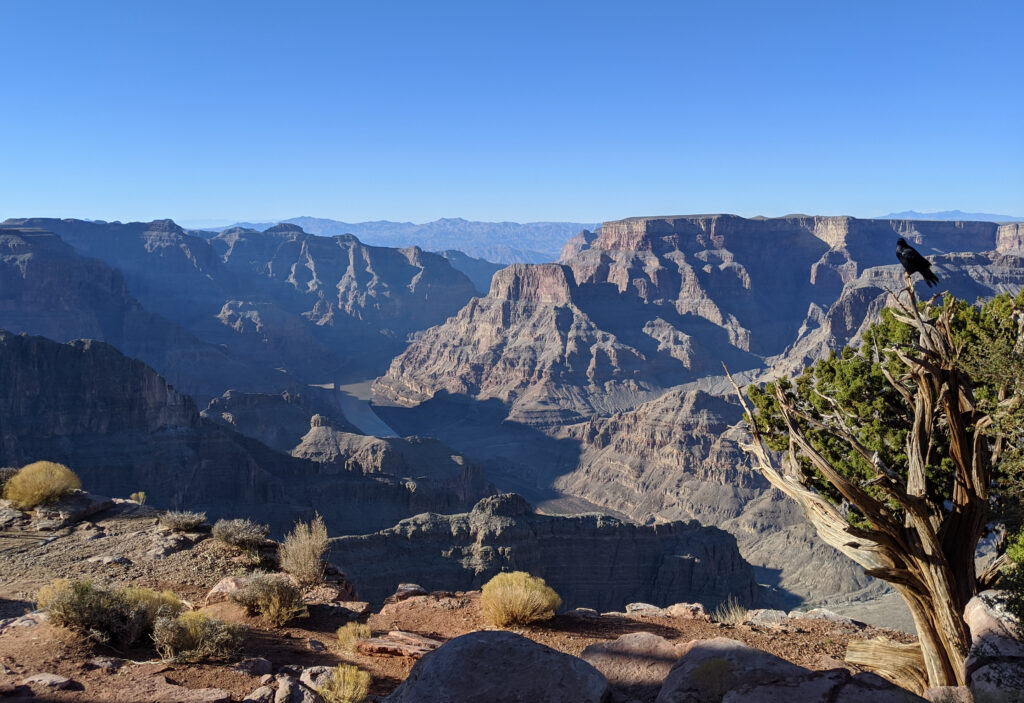
From their entrance, a shuttle bus is provided to take you to the three main “Points” – Guano Point, Eagle Point, and Hualapai Point.
The highlight of the West Rim is the Skywalk at Eagle Point – a cantilevered glass bridge extending out over the edge, 4000 feet up from the floor of the canyon. The website claims it’s strong enough to hold seventy 747 passenger jets, and even though we’d had a hearty lunch at Guano Point Cafe, I don’t think we were even close to the weight of one 747.
Though Skywalk is fun, I think the real views are at Guano Point. There are a couple hikes from this spot, but I really like the cafe and the beautiful views from the outdoor seating area. The All-Access Pass even includes a $10 meal voucher which, at least during my visit, was accepted at this spot.
The third point, Hualapai Point, is like a little old west town. Unfortunately, during my visit, not much was open in this section. There is an old school arcade shooting gallery, a restaurant, and some shops. It’s a bit staged, but I could see it being fun when everything is open. There’s also a zipline at this stop now (included in the All-Access Pass), so I’ll definitely have to go back for that.
Throughout Grand Canyon West, there’s plenty of information about the Hualapai people and geology of the area. While I’ve read a few reviews calling it a tourist trap, I think it’s worth it. Is it a little expensive for what it is? Yes, but I feel that way about most things these days! It was fun, if a little kitschy, and I liked learning about the Hualapai people in addition to the Grand Canyon.
Highly Rated Tours of Grand Canyon West Rim
8. Cathedral Gorge State Park
- Distance: 170 miles | 2 hrs 50 mins
- Activity Types: Hiking, Camping, Horseback Riding
- Costs: $10 per car entrance fee ($5 for NV residents)
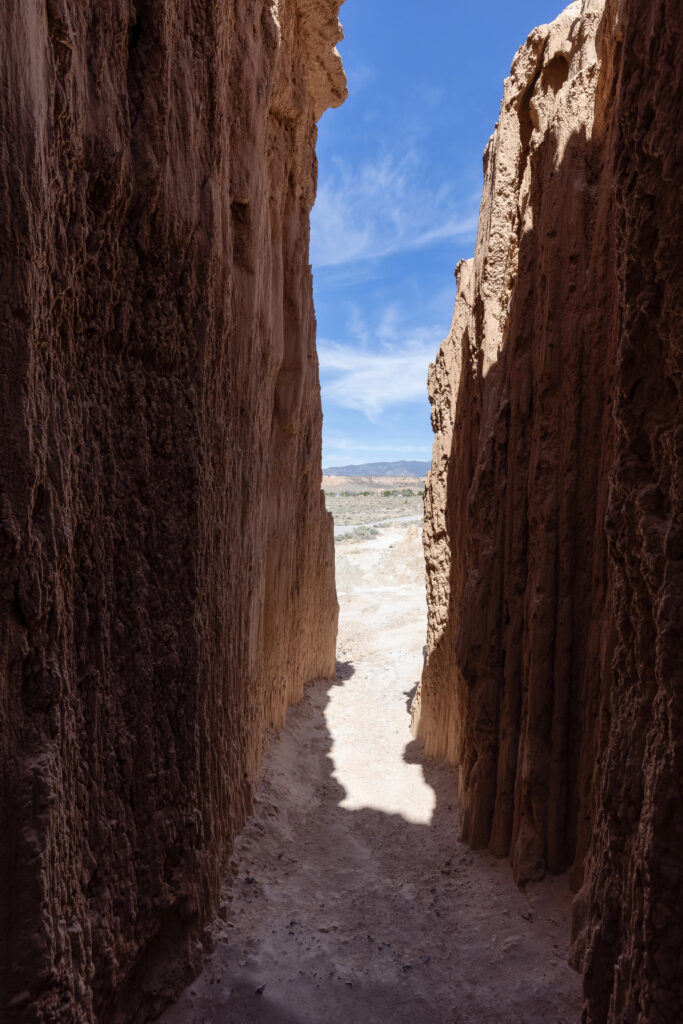
Located about 3 hours north of Las Vegas, Cathedral Gorge State Park is full of slot canyons, hoodoos (so fun to say), and spires. It’s yet another location in and around Southern Nevada that feels like you might be on another planet. I don’t believe nearby Area 51 is hiding any aliens, but if they ever do decide to visit, I can see why they might feel at home in these parts.
It’s another hiking stop, but many of the trails are short and offer amazing views. Moon Caves and Cathedral Cave are top spots. They’re very close to the road and you can pick & choose how deeply you want to explore. The name is misleading, because they aren’t caves, but rather slot canyons created by erosion of volcanic ash in the bentonite clay of the area. I’ve got a bit of claustrophobia, so you won’t find me squeezing into the narrowest caves – but there is still plenty to see in the wider sections. Also nearby is a Civilian Conservation Corps water tower. It’s no longer in use, but it’s fun to see that original 1930s architecture in the parks.
Highly Rated Tours of Cathedral Gorge
9. Death Valley National Park
- Distance: 120 miles | 2 hrs 25 mins
- Activity Types: Hiking, Camping, Backpacking, Biking, Off-Roading, Scenic Drive
- Costs: $30 per car entrance fee (included in the America the Beautiful National Park Annual Pass)
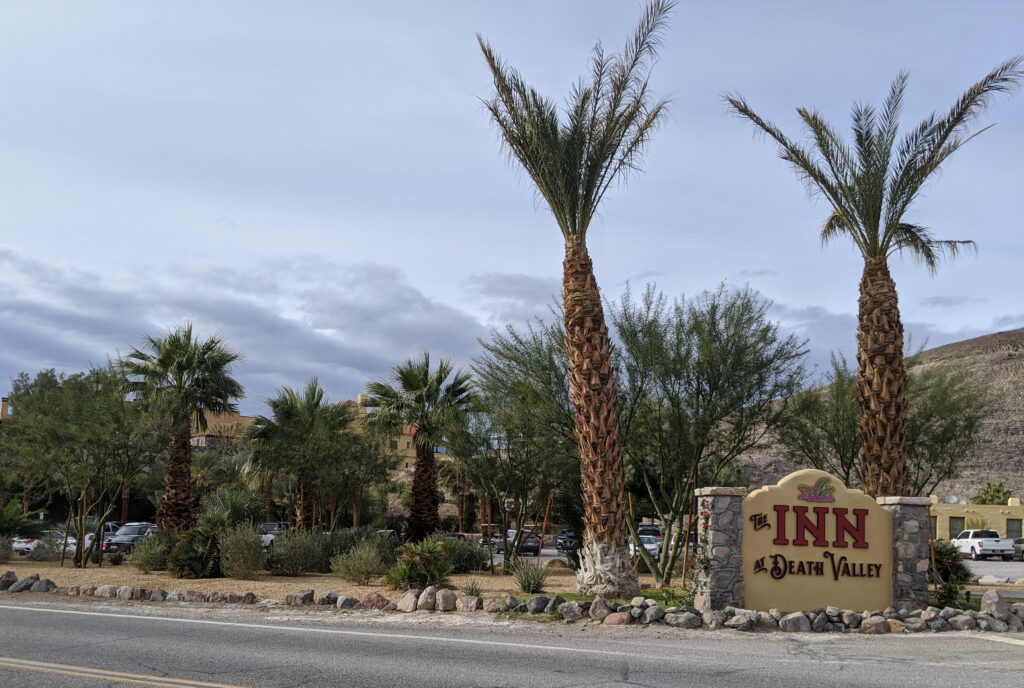
Death Valley National Park, about 2 and a half hours west of Las Vegas, is the hottest, the driest, and the lowest National Park in the country. Badwater Basin sits 282 feet below sea level (coincidentally, the highest point in the contiguous US is in the same county, less than 90 minutes away – Mount Whitney @ 14,505 feet).
While the valley usually receives less than 2 inches of rainfall a year, a few record rains in recent years have resulted in Lake Manly temporarily appearing in Badwater Basin. The aforementioned Hurricane Hillary in 2023 dumped enough water into the basin that kayakers were even able to get out on the lake for a few days.
Though you likely won’t get the chance to kayak in Death Valley, it’s definitely worth a trip to walk out on Badwater Basin, hike to the Mesquite Flat Sand Dunes, or even go on a guided driving tour to some of the filming locations for Star Wars Episode IV: A New Hope and Episode VI: Return of the Jedi. There are also several good locations for stargazing and astrophotography when the skies are clear.
Highly Rated Tours of Death Valley
10. Zion National Park
- Distance: 164 miles | 2 hrs 50 mins
- Activity Types: Hiking, Biking, Backpacking, Camping, Climbing, Kayaking, Scenic Drive (sometimes)
- Costs: $35 per car entrance fee (included in the America the Beautiful National Park Annual Pass)
Zion National Park is located in Southern Utah, just short of 3 hours northeast of Las Vegas, and is one of the most visited of the national parks. It’s full of towering pink and red sandstone cliffs rising up from the banks of the Virgin River.
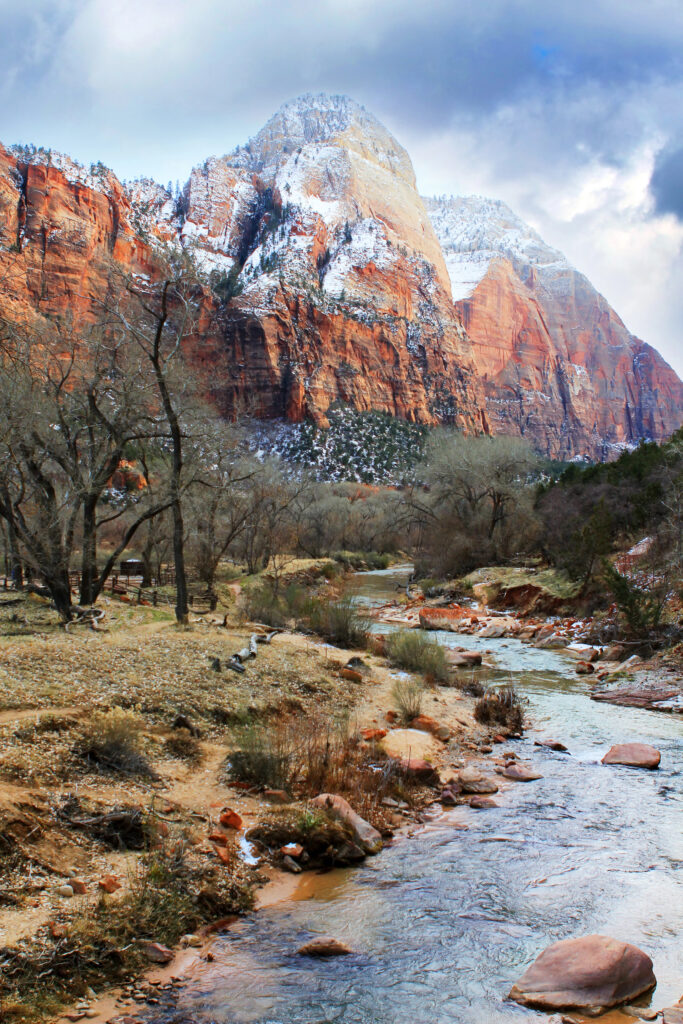
During its busiest times (usually March to November), Zion runs a free shuttle and visitors are not allowed to drive the Zion Canyon Scenic Drive. But, at least on a shuttle, the driver in your group doesn’t have to sacrifice sightseeing for road safety! Regardless of how you do it, the route is about 7 miles and runs from the Visitor Center to the Temple of Sinawava (a natural amphitheater). You can also drive the Kolob Terrace Road, and through the cool tunnel on Zion-Mount Carmel Highway.
Zion is well known for its hiking, with Angel’s Landing and The Narrows being among the most famous. In addition to the scenic drive/bus ride, there is plenty to do for those that aren’t up for wading in the river through narrow canyons. There’s the Zion Human History Museum, and just behind it a viewing deck to check out Towers of the Virgin. E-bikes are quite popular for getting around and taking in the views. There’s dining and a nice lodge to explore as well.
Whatever you choose to do at Zion, be sure to check their website first. Some things are closed seasonally or with changing conditions (for example, The Narrows could be closed due to high water) and others require permits (like Angel’s Landing).
Highly Rated Tours of Zion National Park
Where To Stay
Las Vegas has no shortage of places to stay. Most everything on The Strip, and even off-strip, is connected to a casino. All the hotels are non-smoking, but in many cases you have to walk through a casino to get to the hotel section. So, I’ll call out ones that are totally non-smoking.
💰Budget Options
Circus Circus – Some people hate it, some people love it. It’s not fancy and there are clowns, but it’s clean, safe, centrally located on the Strip, and it has an attached amusement park. Click here to book your stay at Circus Circus.
My Place Hotel – Located in north end of the valley, My Place is a good location for Cathedral Gorge, Valley of Fire, and Zion day trips from Las Vegas. It’s family friendly, close to North Las Vegas’s “Restaurant Row”, and it’s completely non-smoking, no-casino. Click here to book My Place Hotel.
💰💰Mid-Range Options
Park MGM – Fully non-smoking, even the casino. Just three miles from the airport, two miles from the Atomic Museum, and right next door to T-Mobile Arena. Click here to book your stay at Park MGM.
Hilton Garden Inn Las Vegas/Henderson – Well off the strip and a name you probably know. It’s family friendly, fully non-smoking, and its location could shave at least 20 minutes off several of these day trips since it’s in the south east part of the valley. Click here to book your stay at Hilton Garden Inn Las Vegas/Henderson.
💰💰💰Luxury Options
JW Marriott Las Vegas Resort & Spa – Located in the Summerlin area, this one is quite close to Red Rock Canyon and not too far from Mount Charleston as well. It’s non-smoking and is adjacent to Rampart Casino, but not connected. Excellent food and shopping nearby (check out Tivoli Village just down the street). Click here to book your stay at JW Marriott Las Vegas Resort & Spa.
Bellagio – You’re likely quite familiar with the Bellagio thanks to it’s famous fountains. The resort itself is beautiful inside and out. While you’re there, be sure to explore the Conservatory & Botanical Gardens. Just behind the front desk, the Conservatory is redesigned every season and for Lunar New Year. Click here to book your stay at the Bellagio.
FAQs
There’s lots to do outside of Las Vegas, an easy day trip away. But, if you’re just looking to cut to the chase, here are the three most common questions:
What is the best day trip from Las Vegas?
This is all about personal preference and what kind of adventure you’re looking for. If you want a low-key day of coffee shops, antique stores, and diners, then my personal favorite, Boulder City, is the way to go. If you’re looking for something more outdoorsy, then I think Red Rock Canyon is the winner.
What is within a 2 hour drive from Las Vegas?
Las Vegas is pretty isolated, but there’s still plenty within a 2-hour drive. Red Rock Canyon, Valley of Fire, Mount Charleston, Lake Mead, Hoover Dam, Boulder City, and Nelson Ghost Town are all well within a 2 hour drive of Las Vegas.
Is a day trip from Vegas to Grand Canyon worth it?
A day trip from Las Vegas to Grand Canyon West Rim is definitely doable and worth it. However, a day trip from Las Vegas to Grand Canyon National Park would not be worth it to me. You’d spend too much time driving and not have enough time or energy to fully enjoy the National Park. The Grand Canyon is big (some might even say it’s grand) and the park is nearly twice as far as the West Rim.
Final Thoughts
It used to be that people came to Vegas for Vegas – for the gambling, the quick weddings, or the entertainment. Things are starting to change though. More and more people are learning that Las Vegas is a great basecamp for exploring the Southwest. Whether it’s rugged outdoor adventures, quirky shops, or a laid back scenic drive, you can find it within 3 hours of Las Vegas.
Even if you’re in town for the excitement of the strip or for a stuffy work conference at one of the many convention centers – take a break for a day and leave the neon (or fluorescent) lights behind. Rent a car or hop on a tour and see one of the many spots Las Vegas locals know is the secret to why this part of the country is so special.